State-by-State KYC Variations Shaping Depositor Patterns in Virtual Table Environments
Written by Riley Brooks · Jun 17, 2026
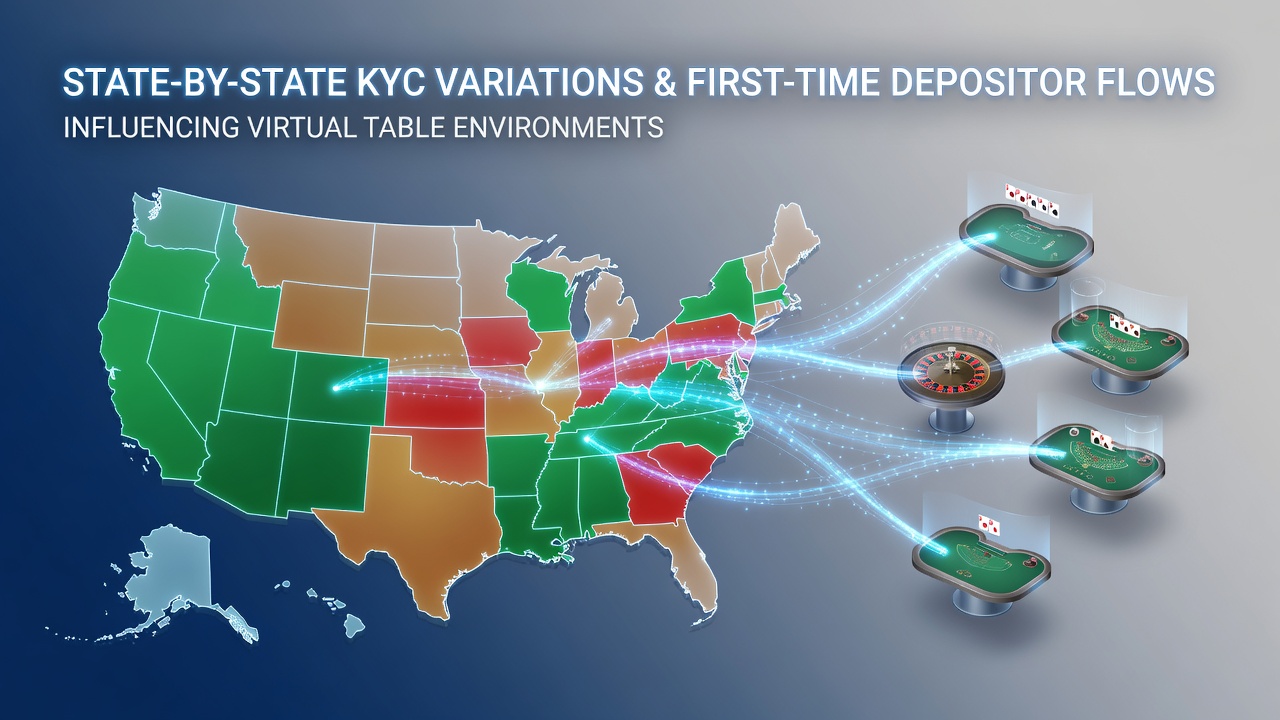
State-by-State KYC Variations Shaping Depositor Patterns in Virtual Table Environments
Know Your Customer requirements differ sharply across regulated US markets, and these differences directly channel how first-time players move funds into virtual table environments such as online blackjack, roulette and baccarat platforms. States that demand extensive identity documentation and manual reviews often see slower initial deposit approvals, while jurisdictions with streamlined digital verification attract quicker transaction volumes from new users seeking live dealer tables.
Core Elements of KYC That Vary by Jurisdiction
Verification depth, acceptable document types, and processing timelines form the main points of divergence. Some states accept electronic scans of government-issued IDs combined with address confirmation through bank records, whereas others require notarized copies or video interviews before allowing deposits. These distinctions matter because virtual table environments rely on real-time funding to maintain player engagement during peak evening hours.
Observers note that platforms operating across multiple states must maintain separate compliance workflows, and the friction created by stricter regimes can redirect new depositors toward markets with faster onboarding. Data collected through June 2026 indicates measurable shifts in deposit initiation rates that correlate with the speed of KYC clearance rather than bonus offerings alone.
Regional Examples Highlighting Flow Differences
New Jersey continues to operate one of the more rigorous verification sequences, yet its automated systems have reduced average approval times to under four hours for most applicants who submit clear documentation. In contrast, Pennsylvania allows initial deposits after basic identity checks but conducts enhanced reviews within the first week, creating a two-stage process that some new users find less disruptive to immediate play sessions at virtual tables.
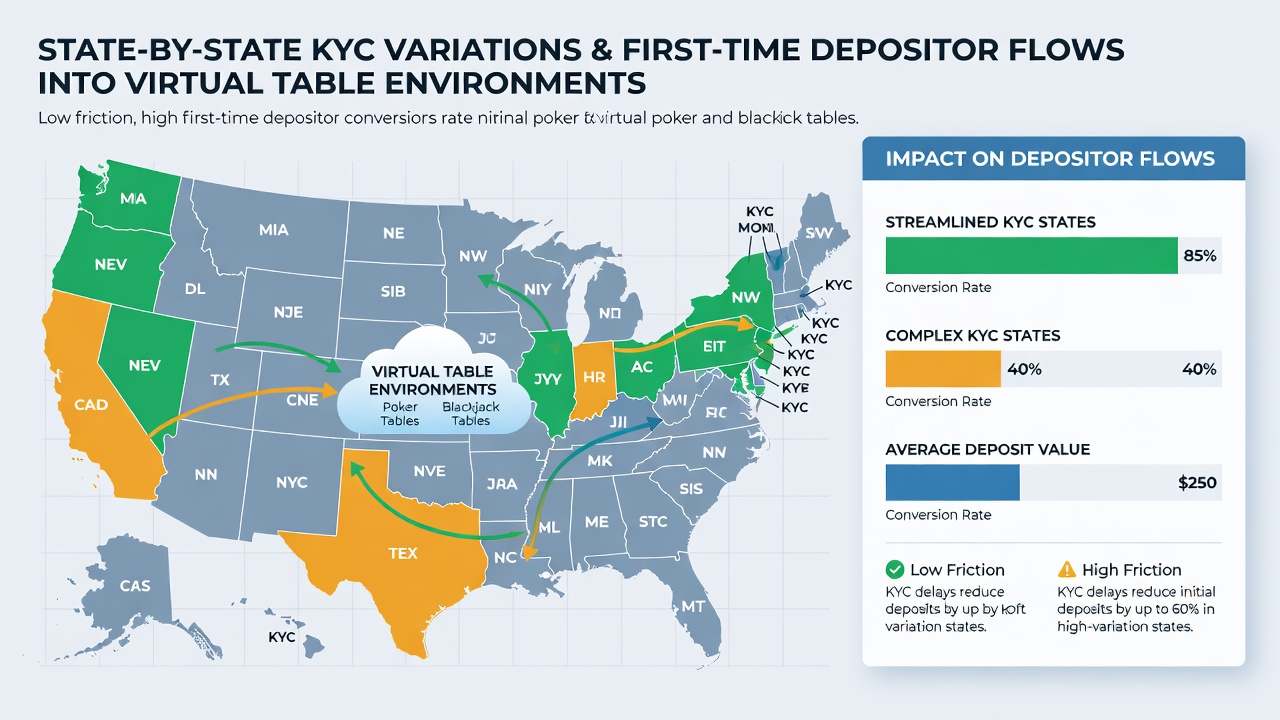
Michigan and West Virginia have adopted hybrid models that blend automated database cross-checks with selective manual review, resulting in approval rates above 85 percent within the same business day according to industry tracking. States such as Delaware maintain smaller player pools yet enforce verification standards comparable to larger markets, which limits overall volume but maintains high compliance consistency.
Impact on First-Time Depositor Behavior
First-time users frequently compare onboarding experiences across available platforms before committing funds, and KYC friction influences which state-licensed sites receive those deposits. Research indicates that environments requiring multiple document uploads experience higher abandonment rates during the verification step, particularly when applicants encounter requests for secondary proof such as utility bills or tax statements.
Platforms respond by pre-populating forms with data from third-party services, yet state rules still dictate the final acceptance criteria. In markets where video verification is optional rather than mandatory, conversion from registration to funded account occurs more rapidly, channeling greater activity toward virtual table offerings that demand continuous bankroll access.
June 2026 Trends in Deposit Timing and Volume
Figures released in early summer 2026 show elevated deposit activity in states that introduced updated digital verification partnerships during the spring. These partnerships reduced average KYC turnaround from 24 hours to under six hours for returning applicants who had previously cleared basic checks, and new depositors followed similar patterns once initial barriers lowered.
Virtual table environments recorded corresponding increases in session starts within the same states, while jurisdictions without comparable updates maintained steadier but slower growth curves. The correlation appears strongest among mobile users who expect near-instant funding before joining live dealer sessions.
Regulatory Bodies and Industry Data Sources
Information compiled by the Pennsylvania Gaming Control Board tracks how verification protocols intersect with transaction volumes across licensed operators. Additional context comes from reports issued by the American Gaming Association, which aggregates anonymized deposit flow statistics from multiple state markets adn highlights the relationship between compliance timelines and player retention metrics.
Conclusion
State-specific KYC frameworks continue to shape entry points for new depositors seeking virtual table environments, with processing speed and documentation demands serving as primary variables. Markets that balance thorough verification with efficient digital tools attract steadier flows of first-time funding, while slower or more fragmented processes tend to disperse activity toward competing jurisdictions. As regulatory technology evolves through 2026, these patterns are likely to shift further in response to updated verification standards and cross-state operational adjustments.