Shifts in Casino Bonus Structures Following Regulatory Updates in Key Markets
Written by Mia Simmons · Aug 19, 2026
Shifts in Casino Bonus Structures Following Regulatory Updates in Key Markets
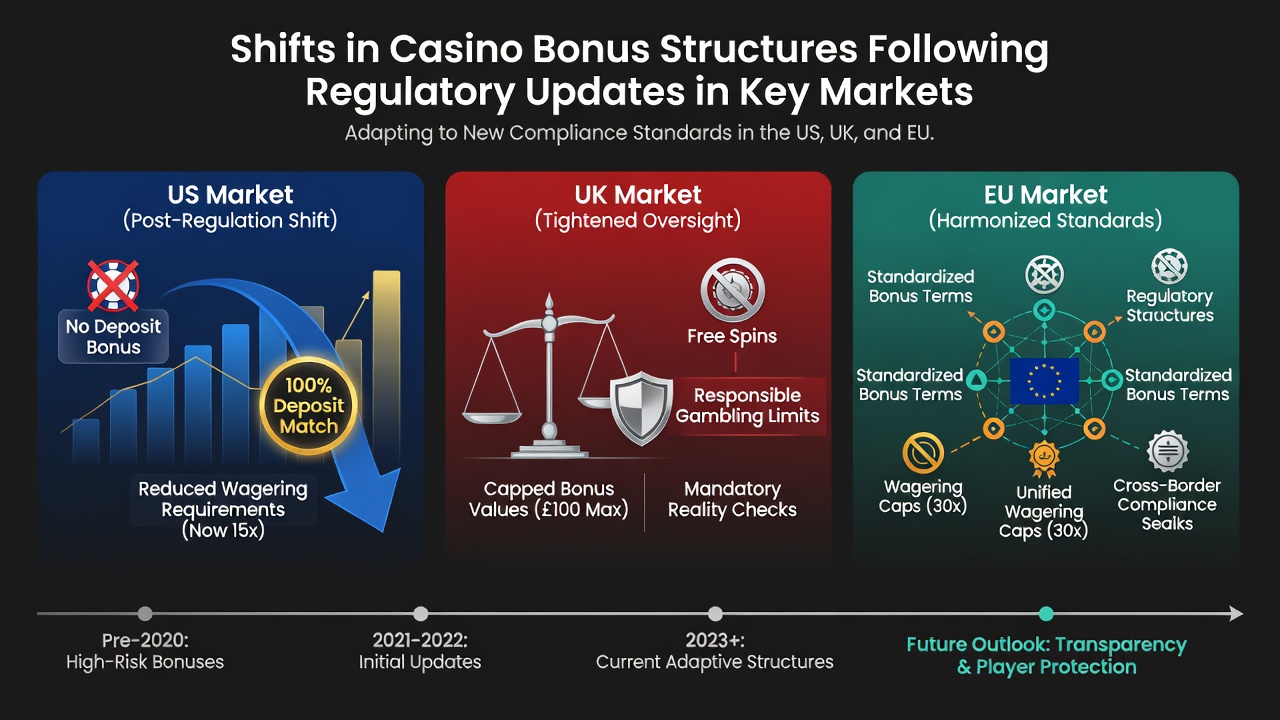
Regulatory changes across several major gaming jurisdictions have prompted operators to revise bonus offerings in structured ways, with adjustments appearing in wagering multipliers, game eligibility, and maximum bet limits during the first half of 2026. Data from state gaming reports show that New Jersey and Pennsylvania implemented updated player protection rules in spring 2026, requiring clearer disclosure of bonus terms and imposing stricter caps on promotional value tied to certain deposit methods. Operators responded by shifting away from high-percentage match bonuses toward tiered loyalty rewards that spread value across multiple sessions rather than front-loading large credits.
North American Adjustments in Detail
Illinois and Michigan followed similar paths when their respective gaming control boards released revised guidelines in early 2026 that addressed bonus funding sources and redemption timelines. Figures released by the Illinois Gaming Board indicate average bonus wagering requirements rose from 20x to 25x on slot play, while table game contributions dropped to 10 percent of total playthrough. Operators adjusted by introducing game-specific bonus pools that limit exposure on high-volatility titles and redirect player activity toward lower-variance options during promotional periods. These modifications align with broader efforts to stabilize revenue reporting and reduce dispute volumes related to bonus clearing.
Canadian provinces such as Ontario introduced parallel updates through the Alcohol and Gaming Commission of Ontario, mandating that bonus funds display separate wallet balances and expire after fixed intervals unless actively used. Platforms operating under the iGaming framework adjusted welcome packages accordingly, replacing no-deposit spins with deposit-matched credits that carry shorter validity windows. Reports compiled by the Canadian Gaming Association document a measurable decline in bonus-related player complaints during the months following implementation, suggesting the changes produced more transparent redemption processes.
International Market Responses
Australian states including New South Wales and Victoria enacted refreshed advertising standards in mid-2026 that directly affected how operators promote bonus value to local audiences. The changes require prominent display of wagering obligations alongside any advertised amount, prompting several licensed sites to reduce headline bonus percentages while expanding ongoing reload programs. Industry tracking from the Australian Interactive Gambling Council shows operators pivoted toward cashback structures that return a percentage of net losses over weekly periods rather than relying on large upfront offers.
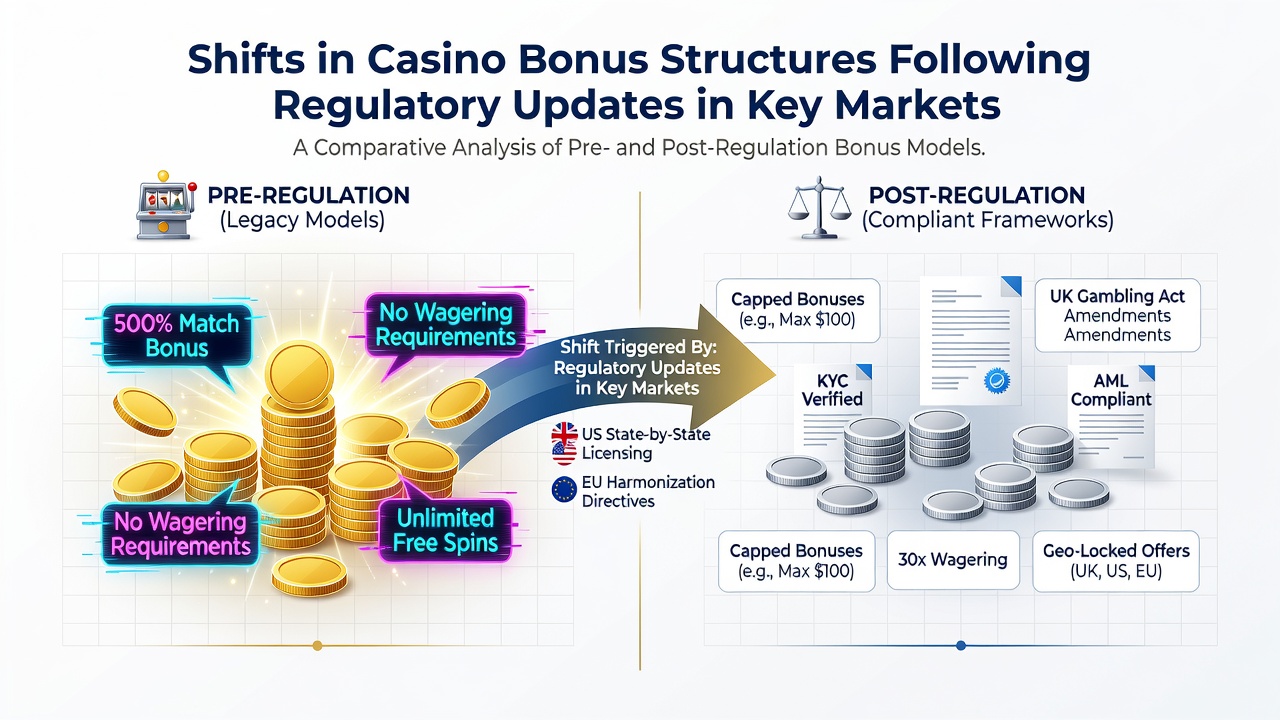
European markets outside the United Kingdom also recorded shifts, particularly in Malta and Sweden, where updated licensing conditions effective August 2026 emphasize responsible gambling integration within bonus mechanics. Maltese authorities now require operators to tie bonus activation to verified play history thresholds, while Swedish rules limit the frequency of promotional pushes per account. Operators adapted by embedding bonus eligibility into loyalty tiers that unlock gradually, a format that satisfies both regulatory scrutiny and player retention goals without front-loading large incentives.
Operational and Technical Impacts
Platform providers supplying multiple regulated markets have rolled out configurable bonus engines that allow rapid adjustment of parameters such as contribution percentages and maximum win caps. These systems enable compliance teams to apply jurisdiction-specific rules without rebuilding entire promotional calendars. Data shared at industry conferences in summer 2026 highlighted reduced development cycles for new bonus campaigns, dropping from weeks to days in many cases. The technical flexibility has also supported testing of localized offers that respect varying tax treatments on winnings derived from bonus play.
Payment processors have noted corresponding changes in bonus-related transaction patterns, with fewer large deposits tied directly to promotional matches and more steady smaller transactions spread across loyalty redemptions. This distribution aligns with regulatory preferences for moderated spending behaviors and has prompted some operators to partner with banking institutions on instant verification tools that streamline smaller, repeated deposits.
Conclusion
Across the jurisdictions examined, regulatory updates have produced measurable standardization in bonus presentation and structure rather than outright reductions in promotional activity. Operators continue to deploy incentives but within frameworks that prioritize transparency, session-based distribution, and alignment with player protection metrics. Ongoing monitoring by gaming authorities will determine whether these patterns persist or evolve further as new compliance data accumulates through the remainder of 2026 and beyond.