Shifting Alliances Between Regional Banks and App Developers Reshape Bonus Rollout Timelines in State-Approved Mobile Table Environments
Written by Kai Brooks · Aug 24, 2026

Shifting Alliances Between Regional Banks and App Developers Reshape Bonus Rollout Timelines in State-Approved Mobile Table Environments
Regional banks have adjusted their partnerships with mobile app developers throughout 2026, and these changes have altered the schedules for bonus releases in state-approved mobile table environments. Data from multiple jurisdictions shows that revised agreements now require additional compliance checks before bonus features activate on portable devices, which extends the time between approval and player access in several states.
Background on Banking and App Integration
State regulators have maintained oversight of mobile table games since the expansion of online wagering platforms, while regional banks handle transaction processing that supports bonus distributions. App developers integrate these banking services into their software, and the resulting alliances determine how quickly promotional offers reach users in approved environments. Observers note that earlier models relied on direct API connections, yet recent shifts have introduced layered verification steps that banks now enforce before funds or bonuses process through mobile interfaces.
Figures from the first half of 2026 indicate that states with mature mobile table regulations experienced slower bonus rollout cycles compared to prior years. Those who track these patterns report that banks have prioritized risk assessments tied to regional economic factors, which in turn affects developer timelines for feature deployment across different platforms.
Developments Observed in August 2026
By August 2026, several alliances between mid-sized regional banks and established app developers had undergone renegotiation, and these updates produced measurable delays in bonus activation sequences for mobile table games. Reports compiled by state gaming commissions document that new partnership terms include extended review periods for bonus algorithms, which must align with updated banking security protocols before release. This adjustment has influenced states such as New Jersey and Pennsylvania, where mobile table environments operate under strict licensing frameworks that tie bonus availability directly to verified banking channels.
One study conducted by researchers at the University of Nevada Reno examined how these alliance shifts correlate with bonus distribution rates, and the findings revealed that platforms operating under revised agreements experienced average delays of 14 to 21 days before new offers became active. Developers have responded by adjusting their internal testing phases to accommodate the additional bank-mandated checkpoints, while maintaining compliance with state-specific rules that govern table game mechanics on mobile devices.
Effects on Bonus Rollout Timelines
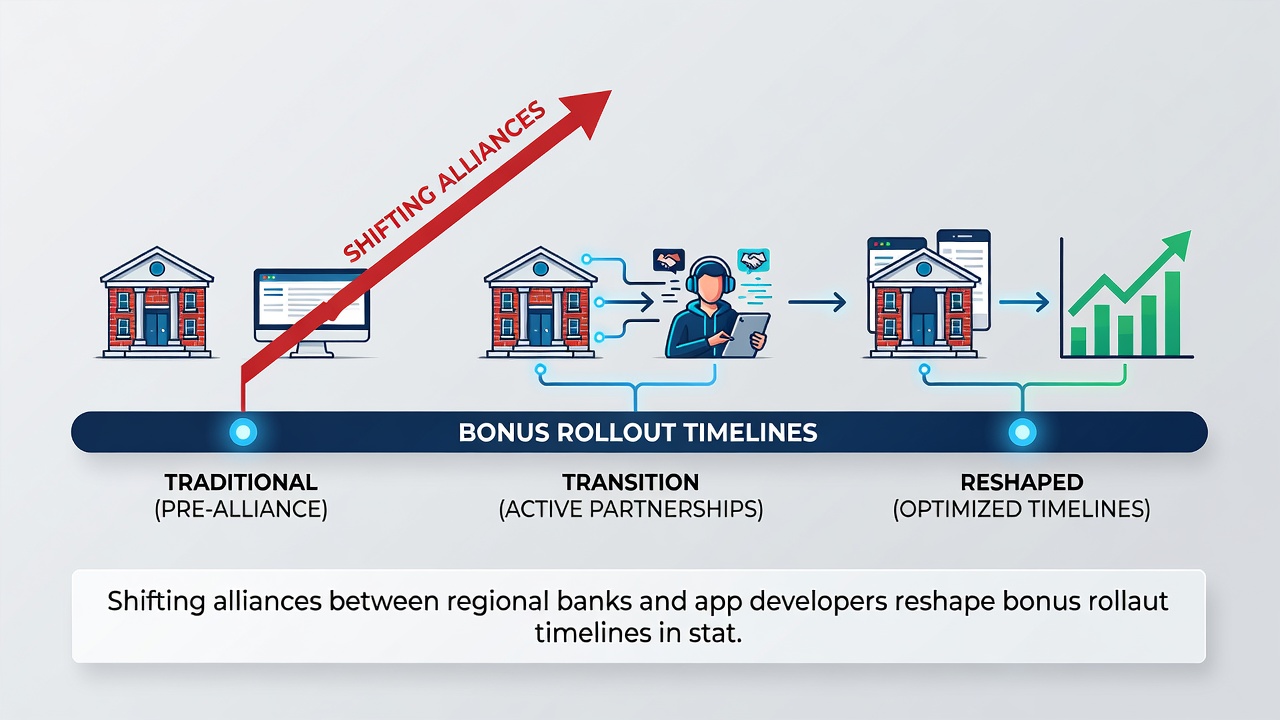
Bonus rollout timelines have lengthened in jurisdictions where banks have consolidated their developer relationships, and this trend appears most pronounced in environments that support live dealer table variants. The process now involves sequential approvals that start with banking partners, move through app certification layers, and conclude with state regulatory sign-off before bonuses reach end users. Data collected across multiple platforms shows that these sequential steps replace earlier parallel workflows, which once allowed faster simultaneous testing and deployment.
Analysts tracking these changes point to specific examples in Illinois and Michigan, where regional banks introduced new data-sharing requirements that developers must satisfy prior to bonus code integration. The result has been a staggered release pattern, with some table game categories receiving bonus support weeks ahead of others on the same mobile application. Those who monitor regulatory filings note that states continue to approve the underlying games, yet the bonus components tied to banking partnerships follow separate, extended schedules.
State Variations and Regulatory Responses
Different states have handled these alliance-driven timeline shifts through distinct regulatory approaches, and evidence from official reports highlights the variations. In New Jersey, regulators have required developers to submit updated partnership documentation whenever banking alliances change, which adds administrative layers that directly impact rollout speed. Meanwhile, data from Australian gambling research centers shows similar patterns in jurisdictions that permit mobile table environments, where banks and developers coordinate bonus features under national oversight frameworks that emphasize transaction security.
Additional documentation from the Canadian Gaming Association outlines how provincial authorities in Ontario adjusted their monitoring protocols in response to comparable banking and developer realignments during 2026. These adjustments have produced consistent outcomes across borders, with bonus timelines extending in proportion to the complexity of the revised alliances.
Conclusion
Shifting alliances between regional banks and app developers have produced clear effects on bonus rollout timelines within state-approved mobile table environments as of August 2026. Regulatory records and industry data continue to track these adjustments, and the resulting patterns demonstrate how banking requirements integrate with developer processes to shape player access across approved platforms. Further updates from state commissions and research institutions will likely provide additional detail on how these relationships evolve in subsequent months.