Regional Time Zone Shifts Influence Live Table Game Scheduling and Bonus Timing Across Multi-State Mobile Platforms
Written by Mia Simmons · Jul 15, 2026
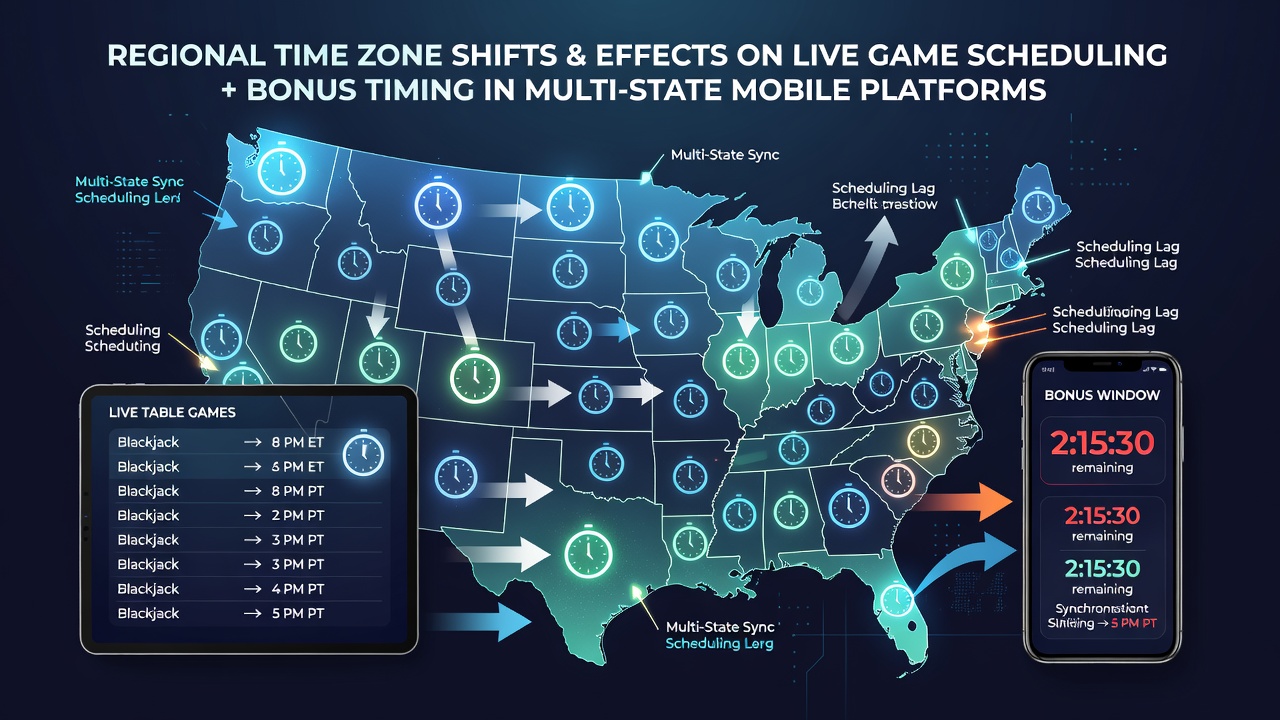
Regional Time Zone Shifts Influence Live Table Game Scheduling and Bonus Timing Across Multi-State Mobile Platforms
Multi-state mobile platforms operating live table games face ongoing coordination demands because users access services from locations spanning multiple time zones, and these platforms must align dealer availability with regional clocks while maintaining consistent bonus activation periods. Standard time adjustments, including daylight saving transitions that occur each March and November, create ripple effects that alter when sessions begin and when promotional windows close for players in states like New York, Illinois, and Nevada.
Core Mechanics of Time Zone Coordination
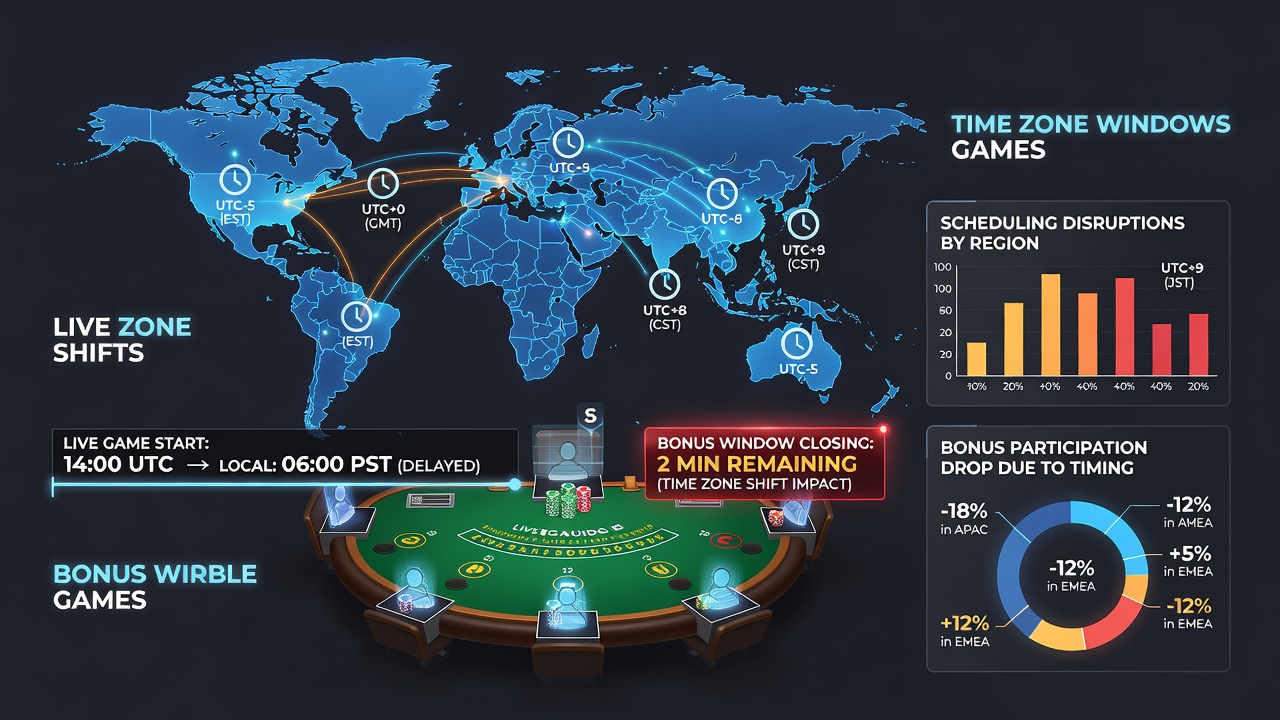
Live dealer tables run on schedules set by platform operators who select start times based on peak player concentrations across covered jurisdictions, yet those operators convert all timings to a single reference such as Coordinated Universal Time before displaying localized versions on user devices. Data from the National Institute of Standards and Technology shows that time zone offsets range from UTC-5 in the Eastern zone to UTC-8 in the Pacific zone during standard time, with further shifts during daylight saving periods that move most regions one hour forward. Platforms therefore publish schedules that automatically adjust for each user's detected location, preventing mismatches where a table advertised for 8 p.m. Eastern appears at an inconvenient hour for someone in Mountain time.
Impacts on Dealer Rosters and Session Availability
Operators maintain rosters that account for dealer availability across physical studios, and these rosters intersect with time zone demands because a dealer working an evening shift in one studio may serve players whose local clocks read several hours earlier or later. In July 2026, when daylight saving time remains active across participating states, evening tables that start at 9 p.m. Eastern coincide with 6 p.m. Pacific, compressing the window when both regions show high concurrent participation. Gaming data collected by the Nevada Gaming Control Board indicates that live table utilization peaks between 7 p.m. and 11 p.m. local time in each market, forcing platforms to stagger start times so that a single dealer rotation can serve sequential regional audiences without overlap gaps.
Bonus Window Timing Variations
Promotional periods tied to deposit bonuses or free-play credits operate within fixed durations measured from the moment of activation, yet those durations translate differently across zones because expiration occurs at a universal server timestamp. A 48-hour bonus activated at 10 a.m. Eastern on a given date ends at 7 a.m. Pacific, which can place the cutoff during early morning hours for western users while eastern users still have several daytime hours remaining. Multi-state platforms address this by publishing expiration notices in both local and reference time, and they record activation events against UTC to ensure every user receives the full advertised interval regardless of location. Studies conducted by researchers at the University of Nevada, Reno, have documented that platforms using synchronized timers reduce user complaints about shortened windows by aligning all countdown displays to the same underlying clock.
State-Specific Observance Differences
Not every jurisdiction follows the same daylight saving schedule, and Arizona along with Hawaii maintain standard time year-round, which creates permanent offsets relative to neighboring states during summer months. In July 2026 a player in Phoenix accessing a multi-state platform sees tables listed one hour later than a counterpart in Los Angeles because Arizona does not shift forward, while the platform's backend continues to reference UTC. These permanent differences require separate schedule branches for non-observing states, and operators update those branches automatically when federal time policy changes or when additional states consider altering observance rules.
Platform Technical Responses
Mobile applications detect device location through GPS or IP geolocation and apply the correct offset before rendering schedules or countdown timers, which reduces the frequency of manual user corrections. Backend systems log every scheduling event against a single time standard, allowing operators to audit whether live tables opened within advertised regional windows and whether bonus expirations matched the durations promised at activation. Industry reports compiled by the Canadian Gaming Association note that platforms employing these centralized logging methods maintain higher compliance rates during periods when multiple states transition between standard and daylight saving time simultaneously.
Conclusion
Regional time zone shifts continue to shape how operators construct live table schedules and calibrate bonus durations because each state maintains its own offset from the common reference clock. Accurate conversion, automated detection, and consistent server timestamps allow platforms to deliver synchronized experiences even when users sit hundreds of miles apart, and these practices remain essential as new jurisdictions enter regulated multi-state markets.