Provider Contracts Shape Slot Volatility Patterns Across Licensed Mobile Platforms
Written by Mia Simmons · Jul 27, 2026
Provider Contracts Shape Slot Volatility Patterns Across Licensed Mobile Platforms
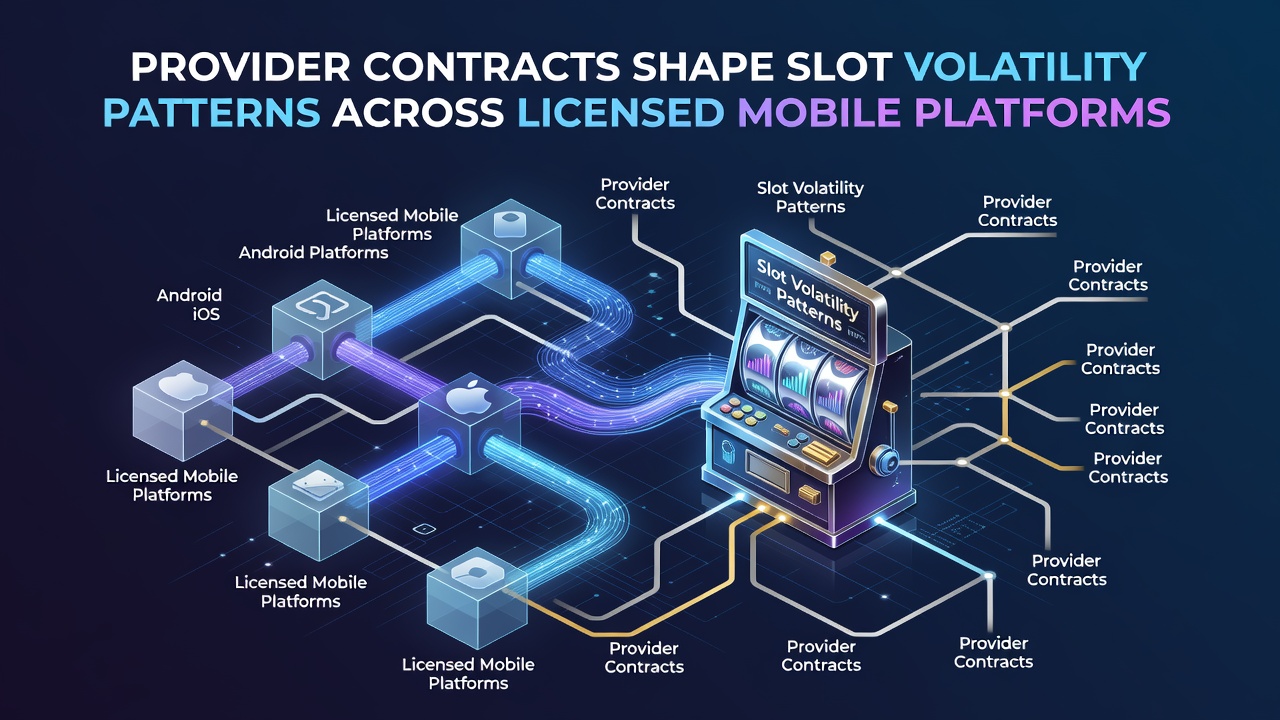
Provider contracts establish the core parameters that determine slot volatility across licensed mobile platforms, and these agreements dictate return-to-player percentages along with hit frequency ranges that operators must implement within specific jurisdictions. Data from regulatory filings shows that major game suppliers embed volatility tiers directly into their software builds, which then get locked during the approval process for each state or country where the platform operates. Observers note that these contractual clauses often reference exact mathematical models, ensuring that mobile versions maintain the same risk profiles as their desktop counterparts despite differences in screen size and processing speed.
Contractual Frameworks and Volatility Calibration
Agreements between suppliers and operators frequently include detailed schedules that list volatility bands, and these bands range from low to high depending on the market segment the mobile platform targets. Research indicates that such provisions require providers to certify game outcomes through independent testing labs before deployment, which creates a standardized pattern that repeats across multiple licensed environments. Those who've reviewed licensing documents find that contracts also address update mechanisms, allowing providers to adjust volatility settings only after new regulatory reviews and operator sign-offs occur.
One study revealed patterns where North American platforms show tighter volatility controls compared to certain international markets, and this stems from state-specific compact language that providers must incorporate into their mobile game engines. Figures from the Nevada Gaming Control Board illustrate how contract renewals in 2025 led to recalibrations in several popular titles, resulting in measurable shifts in session length distributions on mobile devices. Experts have observed that these adjustments often coincide with hardware certification cycles, ensuring that touch-screen interactions do not alter the underlying random number generator behavior.
Regional Licensing Influences on Mobile Implementations
Licensed platforms in different regions adopt distinct volatility profiles because provider contracts must align with local gambling statutes, and this alignment produces noticeable variations in player session data. Data shows that platforms operating under Australian oversight tend to feature mid-range volatility in mobile slots to match responsible gambling guidelines, whereas certain Canadian provincial agreements allow broader ranges when operators demonstrate enhanced player protection tools. What's interesting is how these contractual differences translate into payout timing, with some agreements specifying minimum spin intervals that indirectly affect perceived volatility on smaller screens.

According to industry reports from the European Gaming and Betting Association, contract templates used in EU member states now include clauses that tie volatility settings to device-specific performance metrics, and this requirement emerged after mobile traffic surpassed desktop volumes in several markets during early 2026. Researchers discovered that such provisions help maintain consistency in game mathematics even when network conditions vary, which proves especially relevant for live-updated mobile applications. Those who've examined cross-border agreements note additional requirements for real-time reporting that feed volatility data back to both regulators and providers on a monthly basis.
Technical Integration and Pattern Consistency
Providers integrate volatility controls through application programming interfaces that mobile platforms access during game loading, and these integrations ensure that contractual terms remain enforced regardless of operating system updates. Evidence suggests that suppliers like those supplying major U.S. operators program multiple volatility modes into a single build, then activate the appropriate mode based on the license under which the platform runs. This approach reduces development overhead while satisfying diverse regulatory demands, and contract language typically mandates documentation of which mode applies to each jurisdiction.
July 2026 saw several providers issue updated contract addendums that addressed emerging 5G network capabilities, and these updates focused on maintaining volatility integrity during high-speed data transfers on mobile devices. Observers note that such amendments often reference new testing protocols developed by independent labs, which verify that increased bandwidth does not create unintended shifts in outcome distribution. The reality is that these technical safeguards appear in nearly every major supplier agreement, creating a predictable framework that operators rely upon when scaling their mobile offerings.
Conclusion
Provider contracts continue to serve as the primary mechanism for standardizing slot volatility across licensed mobile platforms, and the patterns they create reflect both regulatory requirements and technical constraints. Data from multiple jurisdictions demonstrates that these agreements produce consistent outcome distributions while accommodating regional differences in player protection standards. Those monitoring industry developments expect further refinements as mobile technology evolves and new licensing frameworks emerge in additional markets.