How Artificial Intelligence Tailors Reward Distributions Across Slot and Table Game Categories in State-Licensed Digital Casinos
Written by Riley Brooks · Jun 24, 2026
How Artificial Intelligence Tailors Reward Distributions Across Slot and Table Game Categories in State-Licensed Digital Casinos
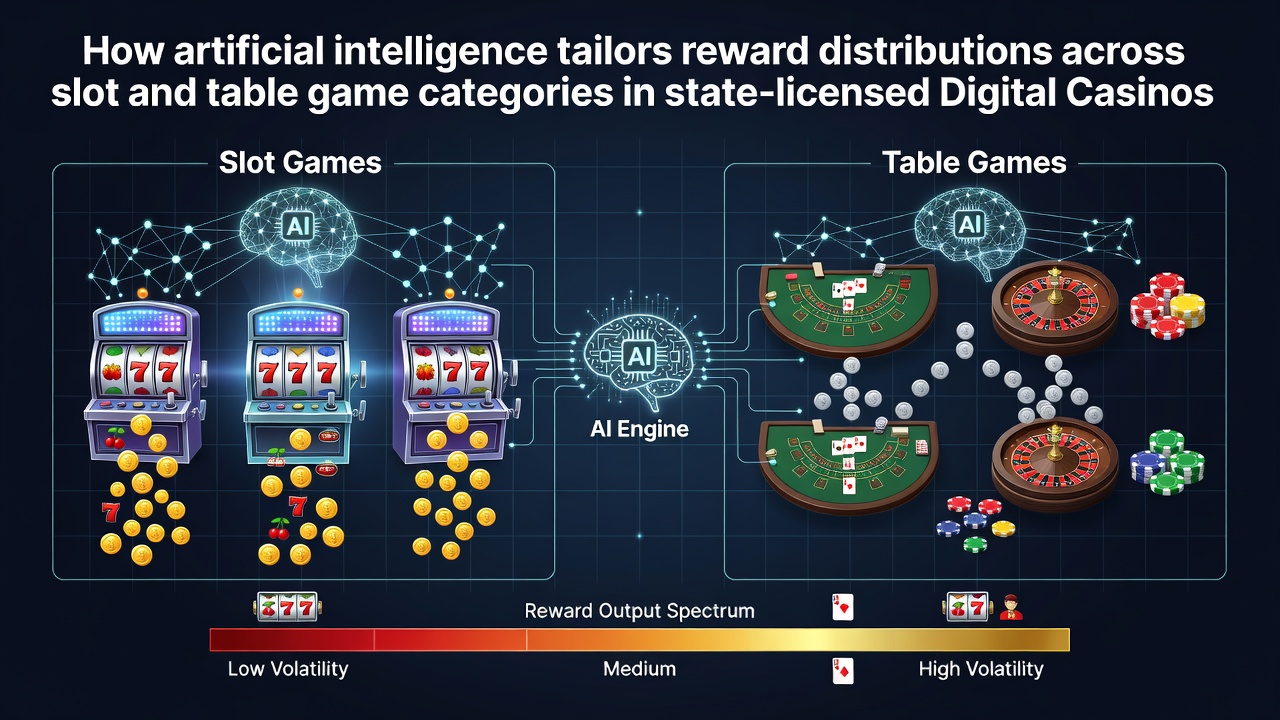
Artificial intelligence systems now drive reward allocation in state-licensed digital casinos by processing real-time player data across distinct game categories, and these algorithms adjust bonus structures, loyalty multipliers, and payout triggers to match observed behavioral patterns in slots versus table games. Operators in regulated markets such as New Jersey and Pennsylvania rely on machine learning models that segment users according to session length, wager frequency, and game preference, which allows platforms to distribute promotional credits and cashback percentages without violating jurisdictional compliance standards.
Slot categories typically generate high-volume micro-transactions, so AI engines prioritize rapid reward cycles like free spin bundles and progressive jackpot entries that activate after short play intervals, whereas table game environments produce longer decision sequences that prompt different incentive models such as strategy-based cashback tiers and live dealer multiplier events. Data from licensed platforms shows these distinctions emerge because slot algorithms track volatility metrics and hit frequency in isolation, while table game models incorporate elements like hand completion rates and side-bet participation to calibrate reward density over extended sessions.
Player Segmentation Through Machine Learning
State-licensed operators feed anonymized transaction logs into supervised learning frameworks that classify accounts by primary game type, and the resulting clusters receive tailored reward schedules that reflect category-specific engagement signals. One study conducted by researchers at the University of Nevada Reno examined datasets from multiple U.S. jurisdictions and found that slot-focused players receive bonus activation sequences at roughly 40 percent shorter intervals than table game participants when AI systems optimize for retention velocity. Table game clusters meanwhile trigger loyalty point accelerations tied to strategic milestones, such as reaching specific win-rate thresholds across blackjack or roulette variants.
These segmentation processes operate continuously, updating reward parameters every few minutes based on incoming telemetry, which prevents static bonus schedules from misaligning with shifting player preferences across game libraries. Platforms in Illinois and Michigan have reported measurable shifts in redemption rates after implementing category-aware AI, particularly when slot rewards emphasize instant-win mechanics while table game incentives favor cumulative play milestones.
Regulatory Compliance and Algorithmic Constraints
Licensing bodies require that AI-driven reward distributions remain transparent and auditable, so operators integrate oversight layers that log every parameter adjustment for review by agencies such as the New Jersey Division of Gaming Enforcement. Algorithms must demonstrate that reward tailoring does not alter underlying game mathematics or exceed approved return-to-player thresholds, and external audits verify these boundaries monthly. In June 2026 several mid-Atlantic states expanded reporting mandates to include category-specific reward analytics, prompting operators to refine their models for clearer differentiation between slot and table game distributions.

Cross-border data sharing agreements further shape these systems, because operators serving multiple jurisdictions must harmonize AI outputs with varying compact requirements while preserving category distinctions. Observers note that platforms achieve this balance by maintaining separate model branches for slots and tables, each constrained by jurisdiction-specific rules on promotional value caps and eligibility windows.
Category-Specific Reward Mechanics in Practice
Within slot libraries AI engines often deploy dynamic free-to-play credit pools that scale according to recent spin velocity and coin denomination patterns, creating reward events that align with peak engagement windows. Table game reward streams instead emphasize progressive loyalty ladders that unlock based on cumulative decision points, such as number of resolved hands or side-bet participation counts, which produces slower but more sustained incentive curves. A report issued by the Australian Communications and Media Authority highlighted similar patterns in regulated markets where operators documented higher average reward redemption values for table game segments when models incorporated real-time strategy feedback loops.
Hybrid players who migrate between categories receive blended reward profiles that AI systems recalibrate through reinforcement learning techniques, ensuring neither slot nor table incentives dominate the overall distribution. This adaptive layering maintains platform parity while respecting the distinct pacing inherent to each game type.
Future Trajectories for AI Reward Frameworks
Continued refinement of reinforcement learning architectures promises tighter integration between reward timing and individual risk tolerance profiles derived from game category data, yet all developments remain bounded by evolving state compact language that governs promotional mechanics. Industry groups including the American Gaming Association continue to publish guidance on best practices for maintaining algorithmic fairness across slot and table distributions in digital environments.
Conclusion
Artificial intelligence has established distinct reward pathways for slot and table game categories within state-licensed digital casinos by leveraging granular behavioral data and regulatory-compliant modeling techniques, and these systems continue to evolve under expanding oversight frameworks as operators balance engagement goals with jurisdictional requirements.