Decoding the Effects of Regional Internet Infrastructure on Loading Times for Interactive Gaming Features
Written by Kai Brooks · Jul 8, 2026
Decoding the Effects of Regional Internet Infrastructure on Loading Times for Interactive Gaming Features
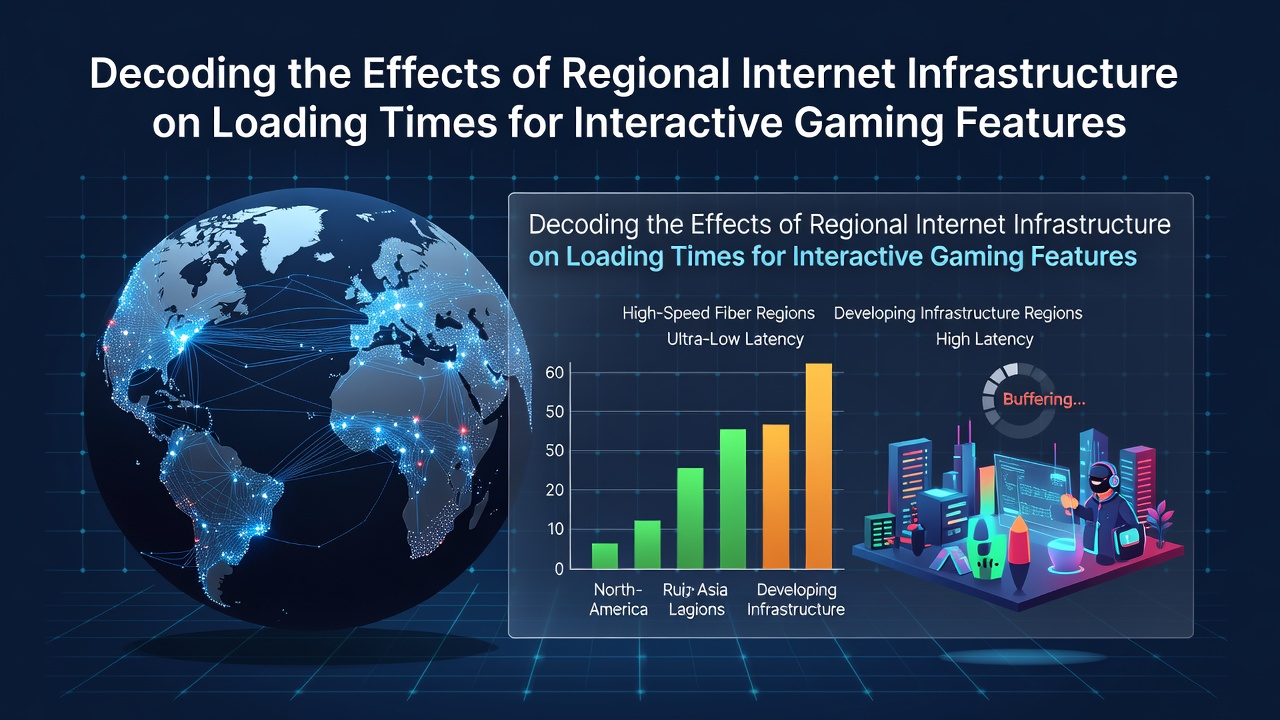
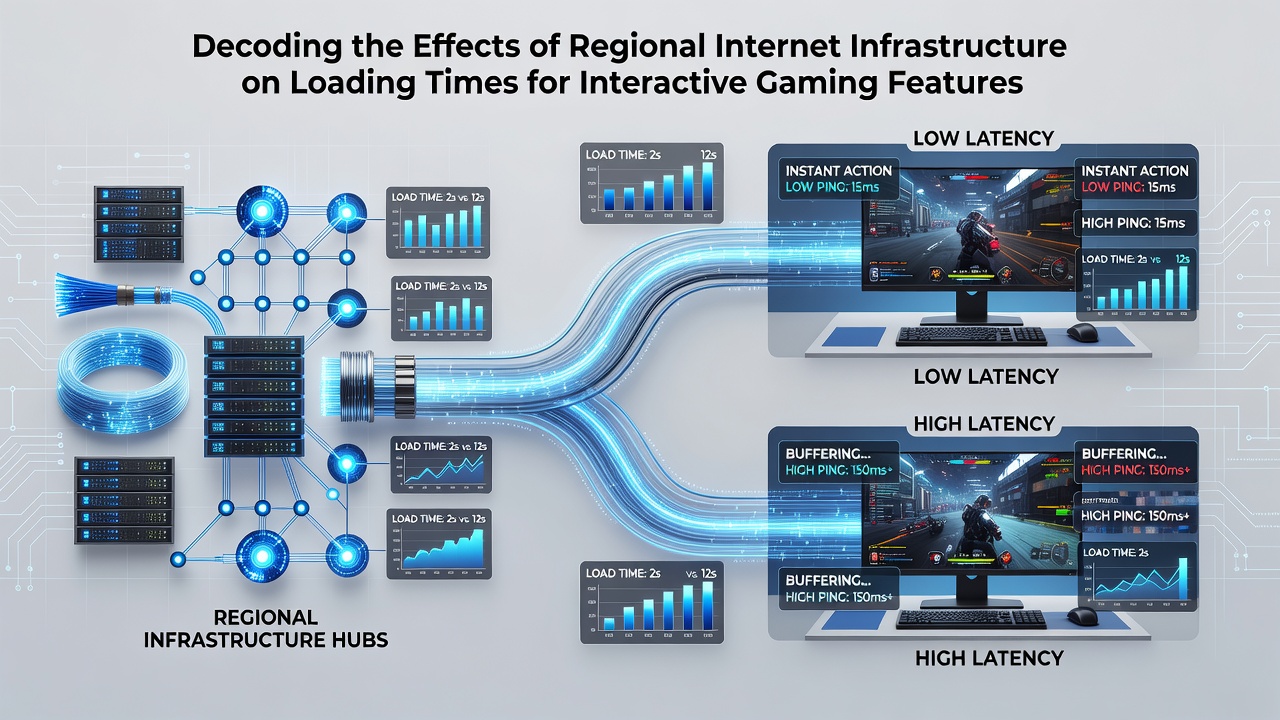
Regional internet infrastructure shapes loading times for interactive gaming features through differences in fiber deployment, latency profiles, and bandwidth allocation across continents and states, with data from July 2026 showing continued gaps between high-speed corridors and underserved zones. Network operators in North America and Europe report that fiber-to-the-home connections deliver median ping times under 20 milliseconds for cloud-rendered game sessions, whereas legacy copper lines in rural districts often exceed 80 milliseconds and trigger asset buffering delays during real-time matchmaking.
Core Infrastructure Variables at Play
Bandwidth capacity and last-mile technology determine how quickly game clients fetch 3D models, texture packs, and server state updates. Studies compiled by the Federal Communications Commission indicate that households with gigabit symmetrical service complete initial level loads in under four seconds on average, while those limited to 100 megabit downstream connections require eight to twelve seconds for the same asset bundles. Packet loss rates compound these effects when regional peering points become congested during evening peak windows, forcing game engines to retransmit critical data packets and extend feature activation sequences such as dynamic lighting or physics simulations.
Geographic Patterns Observed in 2026
Analysts tracking North American markets note that coastal metro areas equipped with dense 5G small-cell grids and municipal fiber rings achieve consistent sub-30 millisecond round-trip times for interactive elements like voice chat overlays and shared-world updates. In contrast, interior agricultural regions still reliant on fixed wireless access experience variable jitter that disrupts synchronization for cooperative gameplay mechanics. European regulators have documented similar divides, with Nordic countries reporting average load completion times 35 percent faster than southern member states where fiber penetration remains below 60 percent in select provinces. Australian Communications and Media Authority figures released in mid-2026 further reveal that national broadband network upgrades in metropolitan zones cut multiplayer lobby entry delays from nine seconds to three seconds after replacement of legacy DSL nodes with fiber distribution hubs.
Impact on Specific Interactive Features
Real-time ray tracing and procedural generation modules suffer most when regional infrastructure cannot sustain sustained throughput above 150 megabits per second. One university-led measurement campaign across twenty U.S. cities found that players on cable modem networks encountered texture pop-in events 2.4 times more frequently than fiber users during sessions exceeding thirty minutes. Cloud streaming services that offload rendering to distant data centers prove especially sensitive to inter-regional routing hops, with each additional 500 kilometers of fiber path adding roughly 8 milliseconds of unavoidable propagation delay that compounds feature responsiveness.
Technical Mitigation Approaches
Game developers deploy regional content delivery networks and edge computing nodes to cache frequently accessed assets closer to end users, thereby shortening the distance data must travel. Observers note that titles utilizing predictive pre-loading based on player location data reduce perceived wait times by 40 percent even on variable connections, according to performance logs aggregated by industry research consortia. Adaptive bitrate streaming for in-game video elements further stabilizes frame delivery when bandwidth fluctuates, although these techniques cannot fully compensate for high baseline latency inherent to certain rural topologies.
Regulatory and Investment Context
Government broadband expansion programs continue to target latency reduction as a priority metric for digital equity initiatives. In July 2026, several state-level projects in the United States completed middle-mile fiber builds that lowered average gaming server response times by 25 milliseconds in previously underserved counties. Comparable efforts in Canada and parts of the European Union emphasize symmetric upload speeds to support user-generated content uploads and live streaming integrations that accompany modern interactive titles. These infrastructure investments produce measurable improvements in feature load consistency without requiring changes to game code itself.
Conclusion
Regional internet infrastructure directly governs teh speed and reliability of interactive gaming features through measurable differences in latency, bandwidth, and routing efficiency. Continued deployment of fiber and 5G infrastructure narrows performance gaps across geographies, while edge caching and adaptive technologies provide interim relief on existing networks. Data collected through 2026 confirms that infrastructure quality remains the dominant variable shaping player experience in real-time and cloud-based gaming environments.